Rosacea can look different from person to person and may be easier to notice on some skin tones than others. For some people, it looks like frequent facial flushing. For others, it may look like persistent redness, bumps, pimples, skin thickening, irritation, or flare-ups that come and go.
Common rosacea symptoms may include redness or discoloration on the cheeks, nose, chin, or forehead; flushing that comes and goes; visible small blood vessels; acne-like bumps without blackheads; burning or stinging; dry or sensitive skin; thickened skin around the nose in more advanced cases; and eye irritation or dryness.
Common Rosacea Triggers
Rosacea flare-ups can be triggered by different things for different people. Common triggers may include heat, sun exposure, spicy foods, alcohol, hot drinks, stress, exercise, wind, cold weather, harsh skin products, fragrance, or certain medications. Keeping a simple symptom and trigger diary may help identify patterns.
When Telehealth May Help
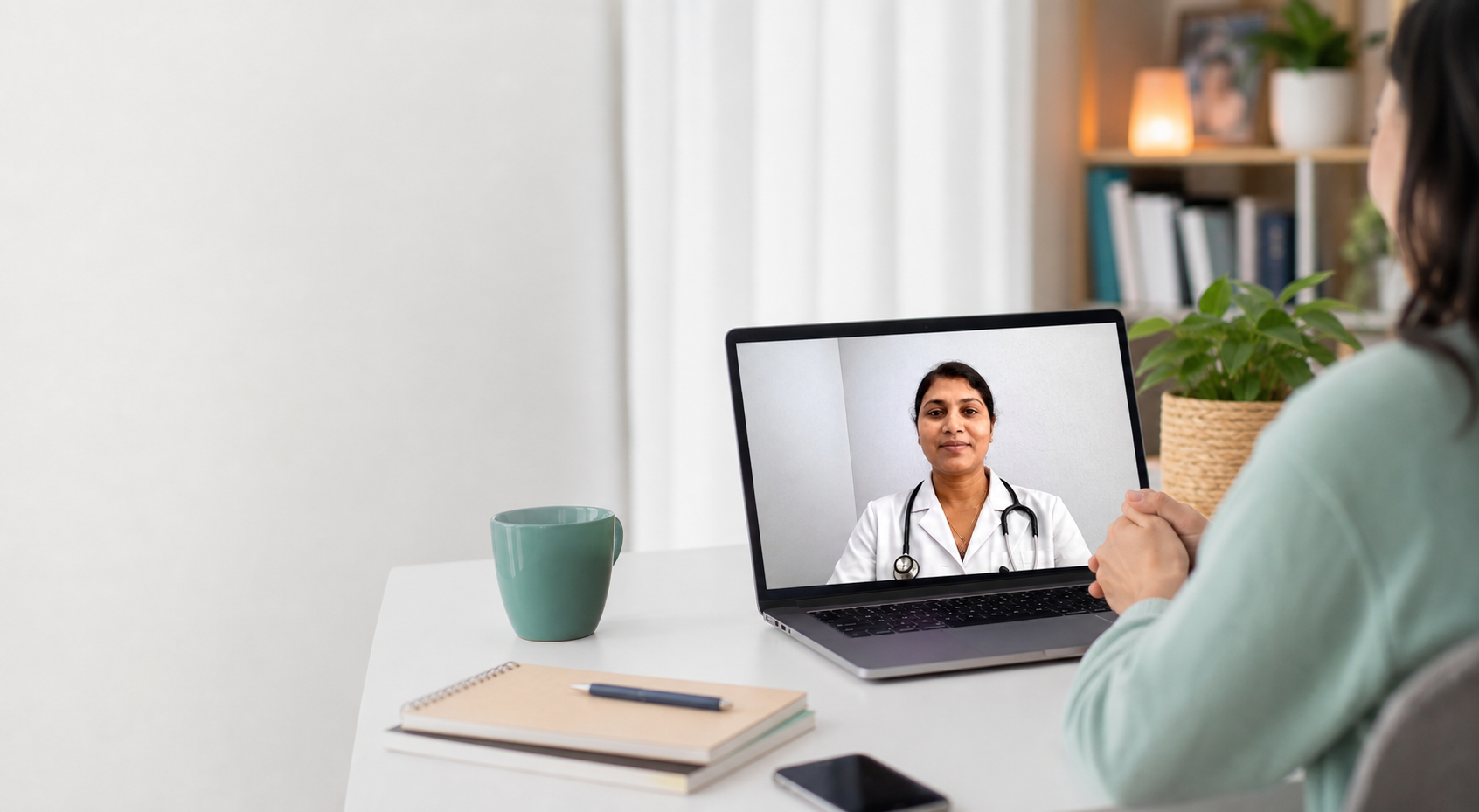
Telehealth can help with many non-emergency rosacea concerns, especially when facial redness, bumps, or flare-ups can be reviewed clearly through video or photos. During a telehealth visit, your provider may ask when symptoms started, what triggers flares, what skin products you use, whether symptoms burn or itch, and whether you have eye symptoms.
Telehealth may help with mild to moderate facial redness, acne-like rosacea bumps, medication review, skin-care guidance, trigger discussion, prescription treatment discussion when appropriate, follow-up after a known diagnosis, and education on avoiding products that may worsen sensitive skin.
Clear photos can be helpful. Try to take pictures in natural light or bright indoor lighting. Include front and side views of the face, and avoid filters or heavy makeup on the affected areas if possible.
When Rosacea Needs In-Person Care
Telehealth has limits. Facial redness and bumps can also be caused by acne, allergic rash, contact dermatitis, lupus, infection, medication reaction, or other conditions. Some concerns may require in-person evaluation, dermatology care, lab testing, or eye evaluation.
You may need in-person care if symptoms are severe, painful, rapidly worsening, associated with swelling, open sores, drainage, fever, or signs of infection. You should also seek medical care if you have eye redness, eye pain, light sensitivity, blurred vision, worsening dry eyes, or symptoms that affect vision.
Call 911 or seek emergency care if you have severe allergic reaction symptoms, trouble breathing, swelling of the lips or tongue, fainting, confusion, or rapidly worsening illness.
How TeleDNPnow Can Support You
At TeleDNPnow, we can help evaluate many non-emergency rosacea concerns through telehealth and guide you toward the safest next step. Care may include skin-care education, review of triggers and current products, medication discussion when clinically appropriate, pharmacy coordination, and follow-up planning.
Rosacea can be frustrating, especially when flare-ups affect your comfort or confidence. A telehealth visit can be a convenient first step to better understand symptoms, reduce triggers, and decide what treatment or referral may be appropriate.
This article is for educational purposes only and does not replace medical advice, diagnosis, or treatment. If facial redness is severe, painful, rapidly worsening, associated with eye symptoms, or not improving, seek medical evaluation. Eye pain, vision changes, or light sensitivity should be evaluated promptly.