Eczema can look different from person to person. Some people may have mild dry patches, while others may have red, dark, thickened, cracked, or very itchy areas. Scratching can make symptoms worse and may sometimes lead to bleeding, open skin, or infection.
Common eczema symptoms may include dry or sensitive skin, itching, red, brown, gray, or darker patches depending on skin tone, scaling, flaking, cracking, rough skin, small bumps, thickened skin from scratching, burning, irritation, or skin that worsens after soaps, fragrances, sweat, or weather changes.
When Telehealth May Help
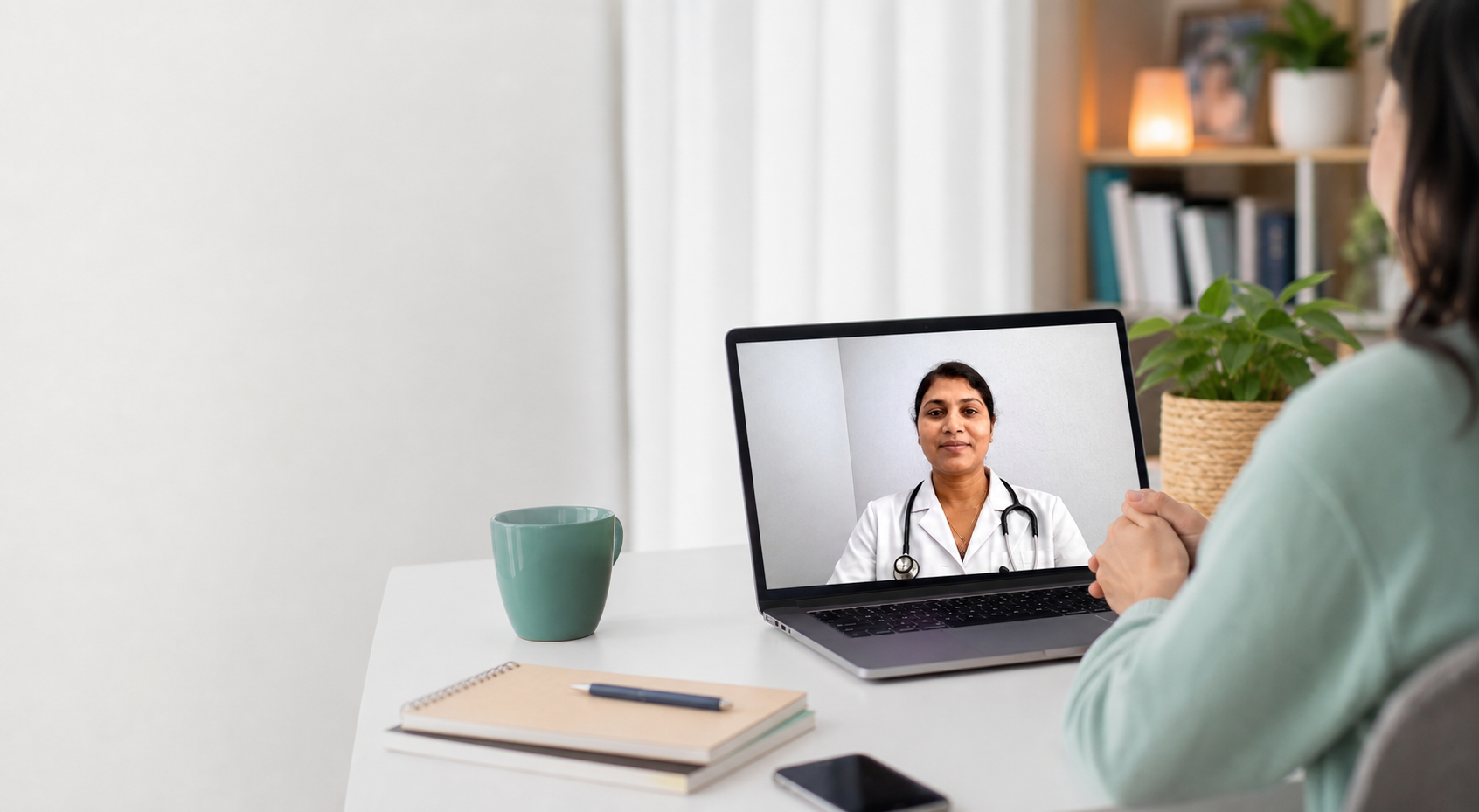
Telehealth can help with many mild to moderate eczema concerns, especially when symptoms can be reviewed clearly through video or photos. During a telehealth visit, your provider may ask where the rash is located, how long it has been present, what makes it better or worse, what products you use on your skin, whether you have allergies or asthma, and whether there are signs of infection.
Telehealth may help with mild eczema flare-ups, dry or itchy skin, medication review, moisturizer and skin-care guidance, trigger discussion, prescription cream discussion when appropriate, follow-up after a known eczema diagnosis, and education on preventing future flare-ups.
Good skin care is an important part of eczema management. This may include using gentle fragrance-free cleansers, moisturizing regularly, avoiding known triggers, limiting harsh soaps, protecting the skin barrier, and following treatment instructions carefully.
Clear photos can be very helpful during a telehealth visit. Try to take pictures in natural light or bright indoor lighting. Include close-up photos and a wider photo showing where the rash is located. Avoid filters, heavy lotions, or makeup on the area before taking the photo if possible.
When Eczema Needs In-Person Care
Sometimes eczema needs in-person evaluation. Telehealth has limits because some skin concerns may look similar to eczema but may actually be infection, psoriasis, allergic contact dermatitis, fungal rash, scabies, medication reaction, or another condition that requires hands-on evaluation or testing.
You may need urgent or in-person care if you have fever with rash, skin that looks infected, yellow crusting, pus, drainage, open sores, rapidly worsening redness or swelling, severe pain, red streaks spreading from the rash, rash around the eyes or face with swelling, widespread blistering, rash after starting a new medication, eczema that is not improving with treatment, severe itching that affects sleep or daily life, frequent flare-ups, or an unclear diagnosis.
Call 911 or seek emergency care right away if you have trouble breathing, swelling of the lips or tongue, severe allergic reaction symptoms, fainting, confusion, or rapidly worsening illness.
How TeleDNPnow Can Support You
At TeleDNPnow, we can help evaluate many non-emergency eczema concerns through telehealth and guide you toward the safest next step. Care may include skin-care education, discussion of triggers, medication review, prescription treatment when appropriate, and follow-up planning. If symptoms suggest infection or another condition that needs hands-on care, you may be advised to seek urgent care, dermatology, or in-person evaluation.
Eczema can be frustrating, but support is available. A telehealth visit can be a convenient first step to better understand your symptoms, improve skin-care habits, and decide what treatment or follow-up may be appropriate.
This article is for educational purposes only and does not replace medical advice, diagnosis, or treatment. Eczema and other rashes can sometimes require in-person evaluation. If symptoms are severe, spreading, painful, infected, associated with fever, or rapidly worsening, seek medical care right away.